The Sepik region of Papua New Guinea is renowned worldwide for its extraordinary artistic traditions. In the Diocese of Aitape, these ancient art forms have found beautiful expression in Christian worship and devotion.
Sepik Art: A Living Tradition
Sepik art is characterized by:
- Carved wooden figures — Spirits, ancestors, and totemic animals
- Bilum patterns — Intricate string bag designs with symbolic meanings
- Painted facades — The famous haus tambaran (spirit houses) with elaborate paintings
- Pottery — Clay vessels with distinctive Sepik designs
- Story boards — Carved panels telling community stories
Christian Art in the Sepik Style
Church Architecture
Several churches in the diocese incorporate traditional Sepik design elements:
- Carved altar pieces featuring Christ in Melanesian style
- Baptismal fonts shaped like traditional water vessels
- Stations of the Cross rendered in Sepik carving traditions
- Church facades echoing haus tambaran designs
The Aitape Cathedral
The Cathedral of the Holy Spirit in Aitape features remarkable examples of inculturation:
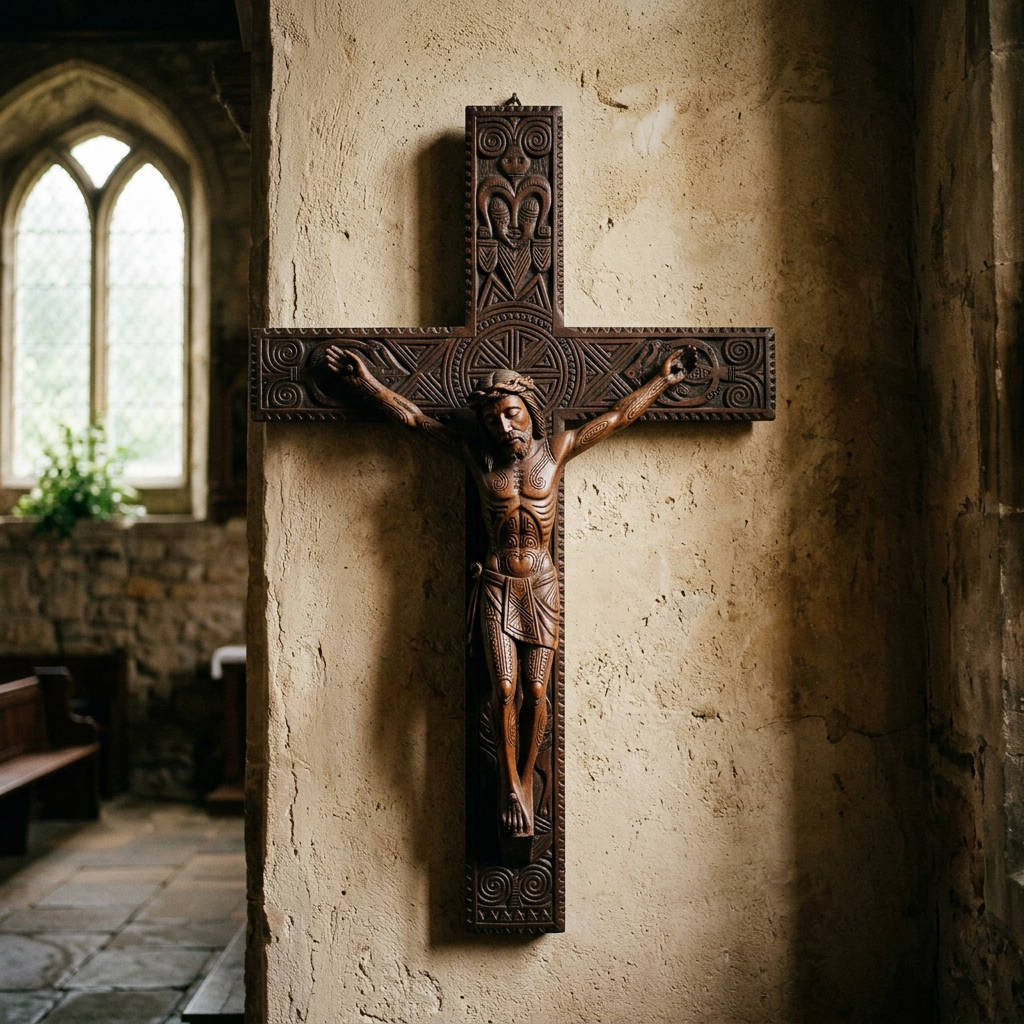
- A wooden crucifix carved in traditional Sepik style
- Wall panels depicting biblical scenes with Melanesian figures
- Traditional motifs incorporated into the liturgical vestments
Inculturation: Gospel Meets Culture
The Second Vatican Council encouraged the Church to engage with local cultures, finding in them “seeds of the Word.” In the Sepik:
“Our ancestors’ art expressed their deepest spiritual longings. When we use these same art forms to express our Christian faith, we are not destroying tradition — we are fulfilling it.” — Bishop Siby Mathew
Preserving the Tradition
The diocese supports several initiatives to preserve and develop Christian Sepik art:
- Art workshops for young carvers and painters
- A small museum of Christian Sepik art at the Bishop’s House
- Commissioning of new artworks for parish churches
- Documentation of elderly artists’ techniques and knowledge
Gallery
We invite parishes to submit photos of traditional Christian art in their churches for our online gallery. Contact the diocesan office for details.